
Tallahassee Neighbors by Block
Public sources describe a block in layers. Tallahassee-Leon County GIS supplies parcel shape and adjacency. The Property Appraiser connects each parcel to the tax owner, mailing address, situs address, and land facts. A lawful voter extract may show unprotected registered voters by residence address. Permits and code records describe public activity at a parcel, while old reverse directories preserve listed householders from a given year. The city's voluntary association database supplies community contacts and boundaries, not a resident roster.
| Source | What It Shows About a Block | Access |
|---|---|---|
| TLCGIS adjacent parcels | Parcel configuration, tax IDs, and map layers | Free reference map |
| Leon property roll | Owner, situs, mailing address, use, acreage, and sales | Free search and export |
| Florida voter extract | Unprotected registered voter presence by address | Public request; no ballot choices |
| Neighborhood Association Database | Group name, officers, contacts, and boundaries | Voluntary community-contact layer |
| Historical reverse guides | Listed households and vacancies by street and year | Library or digitized edition |
These distinctions prevent a common error. A tax owner can live elsewhere, a mailing address can differ from the property location, and a renter may not appear in the parcel file at all. A homestead flag is an occupancy clue, not a list of every person in the home. Use the map and roll to understand the physical block, then add another source only for the fact it was created to record.
Permit and code files add another narrow layer. Tallahassee Growth Management holds city permit records, while county Development Support and Environmental Management serves parcels outside city jurisdiction. A public file may name an owner, applicant, contractor, project address, work description, permit number, dates, inspections, or code status. Those roles describe a project. They do not prove that the named person lived there. Check the TLCGIS city-limit layer or the Property Appraiser tax district before choosing the custodian.
Tallahassee Neighborhood Contact Layer
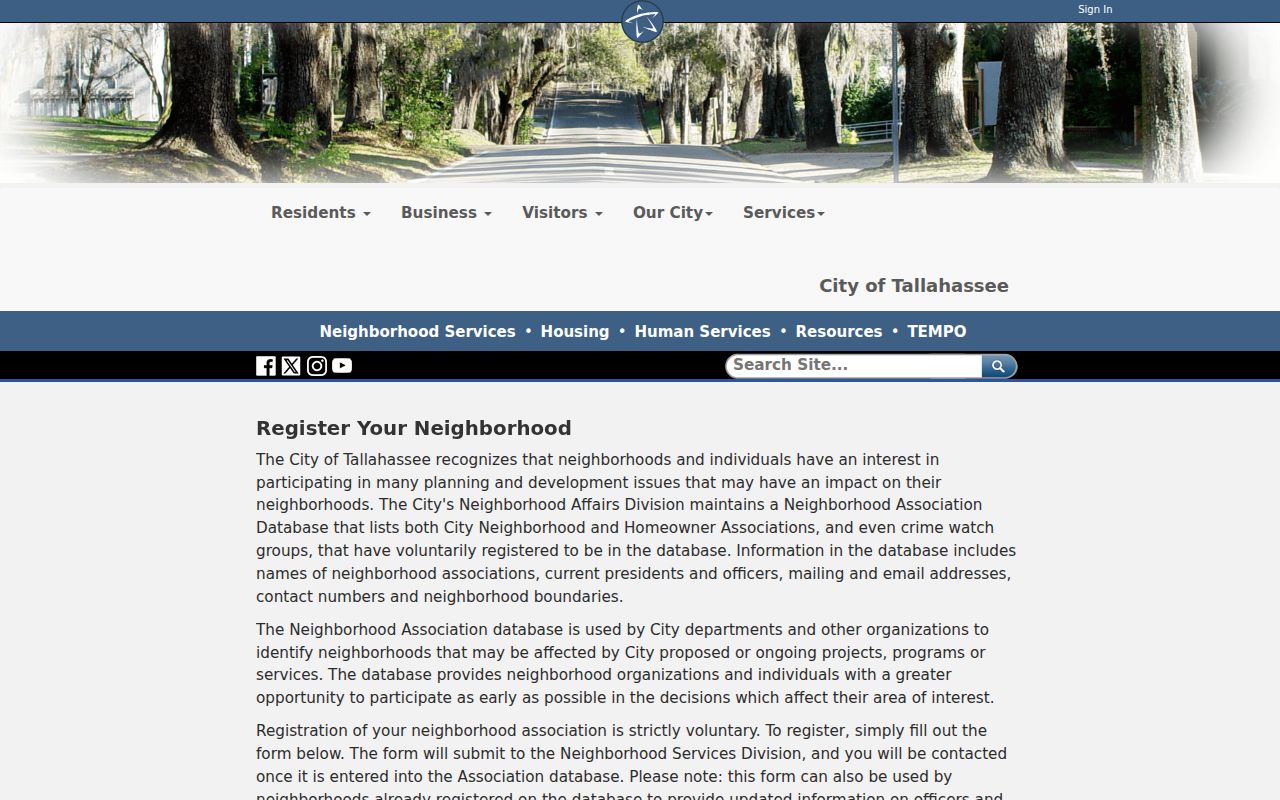
The City Neighborhood Affairs program maintains a voluntary database for neighborhood associations, homeowners associations, and crime-watch groups. Its documented fields include the association name, current president or officers, mailing address, email, phone, and boundaries. Registration is optional, so absence does not prove that a community has no group. An officer's contact also does not reveal the association's members.
| Community source | What it can establish | What it cannot establish |
|---|---|---|
| Association database | Public group contact and stated boundary | Complete neighborhood or member list |
| Open Neighborhoods and TLCGIS | Mapped community context | Every person's chosen neighborhood identity |
| Riley, FAMU, church, and civic archives | Historical organizations and published rosters | Private living membership |
The Tallahassee Neighborhood Association Database shows the registration and contact fields used by the city.
This source helps a resident reach a block-level civic contact. It should never be treated as a directory of the people who live within the boundary.
Historical community sources require the same care. Riley Digital Archive, FAMU's Meek-Eaton Black Archives, FSU Special Collections, and church or civic collections may preserve old programs, photos, reunion papers, and published rosters. They are valuable for understanding how a Tallahassee block formed. Living congregation or group membership remains private unless the organization has deliberately published it.
Map Tallahassee Neighbors by Parcel
The verified block method is manual. Tallahassee-Leon County Land Information accepts a parcel address or TaxID and allows map clicks. Zoom until boundaries are clear, then work outward from the subject. The public application does not document a general resident-oriented buffer or radius tool, so do not assume one exists.
- Search the known address in Tallahassee-Leon County Land Information, or enter its TaxID.
- Click every parcel sharing a front, side, or rear edge. Add diagonal parcels only if they fit the intended block.
- Record each parcel ID and open its Leon Property Appraiser detail. Compare situs and mailing addresses.
- Use the street-name-only property search and export when the task grows beyond the immediate block.
Parcel-NAL means Name, Address, Location and comes from the Property Appraiser. GIS also supplies jurisdiction, zoning, flood, school, aerial, and city-limit context. The map is a reference, not a survey or legal description. For a complete named-road workflow, continue with the Tallahassee street directory.
If clicking parcels becomes slow, search the Property Appraiser by street name alone and omit the suffix. The agency's documented workflow can return a whole street and export selected or all results. Sort by parcel ID, then compare location, owner, property use, tax district, and acreage. This is faster for a long frontage, but the GIS view remains better for seeing which parcels touch the subject at the rear or side.
Tallahassee Voters on a Block
Florida's personal voter-status form cannot browse nearby addresses. A block view instead requires a lawful public-record request or the statewide monthly extract. Public fields may include name, unprotected residence and mailing address, birth date, party, phone, email, status, precinct, districts, and voting history. The history records elections in which a person voted, never the selected candidates or ballot choices.
The Leon Elections public-record request page documents online, in-person, phone, email, and letter channels.
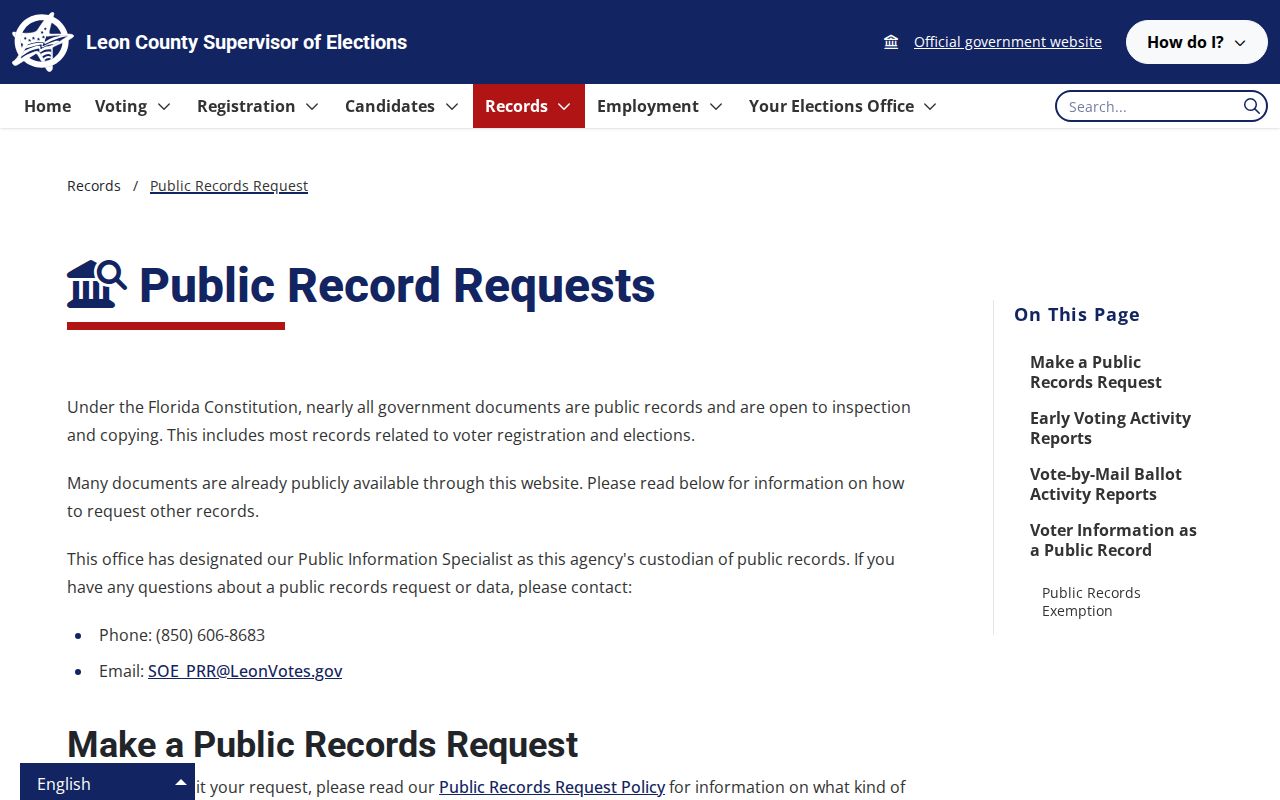
Leon accepts requests at its Apalachee Parkway office during published weekday hours, or through SOE_PRR@LeonVotes.gov and 850-606-8683. Describe the fields, geography, format, and date range needed.
The Florida voter extract page covers the statewide monthly files.
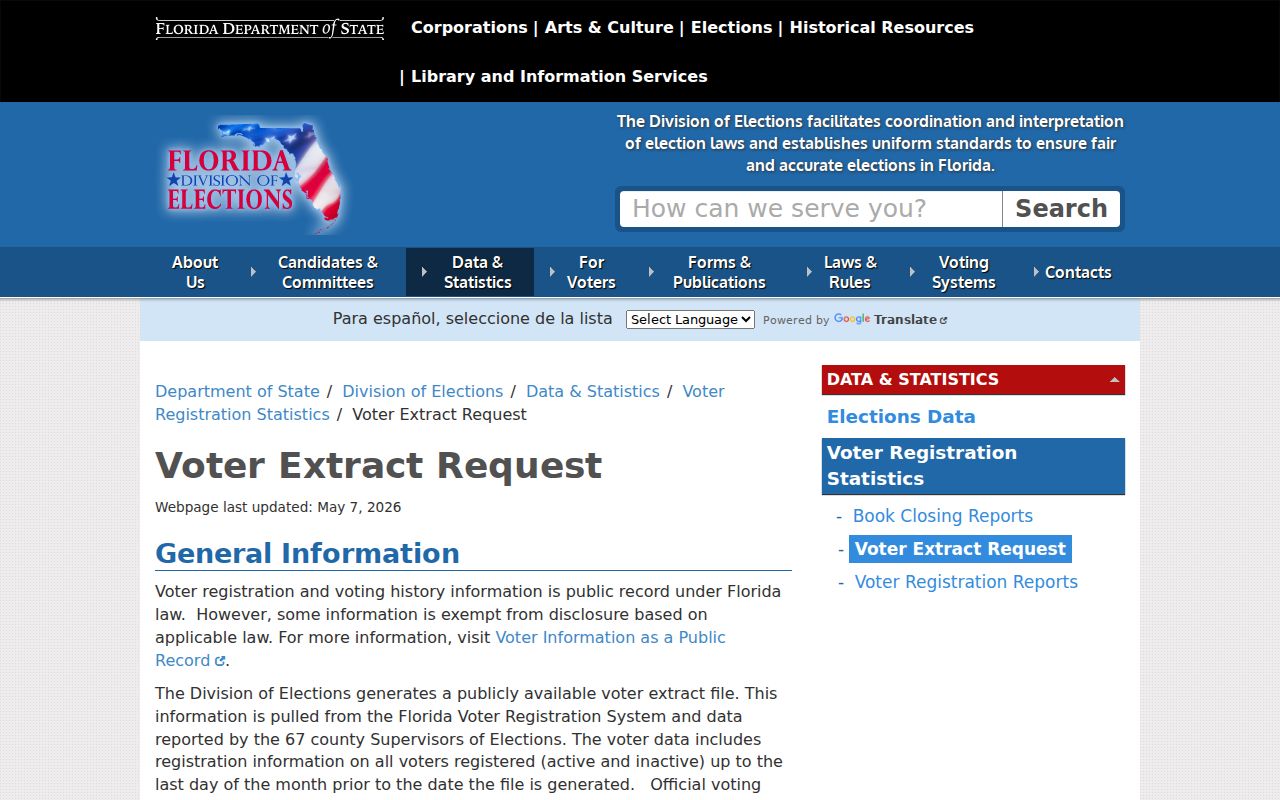
The extract contains active and inactive registrations through the prior month and up to ten years of voting history, but excludes protected, confidential, preregistered, and Address Confidentiality Program records.
Compare Tallahassee Neighbor Sources
Official records and commercial compilations answer different questions. County and state indexes show the custodian, source purpose, and limits. Commercial neighbor tools may combine old and current material, merge people with similar names, and omit source dates. They can suggest a lead, but they are not proof of who occupies a home.
| Source type | Best use | Main caution |
|---|---|---|
| Official parcel and GIS | Owners, parcel identity, adjacency, jurisdiction | Owner is not always occupant |
| Official voter or permit record | A defined public registration or project role | Exemptions and source-specific limits apply |
| Commercial compilation | Possible lead for later official checking | Stale data and same-name merging |
Always return to the custodian before relying on a match. If a commercial listing is wrong, use its suppression or privacy process, provide only the identifiers needed to match, retain the case number, and recheck.
Historic Tallahassee Neighbors
Reverse city directories list a street by number and may identify a householder, phone, vacancy, or other printed notation for that year. They are useful for seeing who appeared next door before modern parcel systems. Yet omissions matter. A person may be absent because the compiler missed the household, an address changed, a building was vacant, or the structure did not yet exist.
Tallahassee history makes this block view especially useful. City heritage research used directories to document Black homeownership on Riley's Jefferson Street block in 1904 and 1919. The city's History in Your Hands map and collections at Riley, Meek-Eaton, FSU, and the State Archives can add maps, photos, newspapers, and family papers. These sources show change over time without turning a historical roster into a claim about current neighbors.
Note: Historic street numbers should be checked against maps, plats, and legal descriptions before being matched to a modern parcel.
Tallahassee Safety Radius Search
The FDLE offender registry is the one researched public tool with an Address, City, ZIP, and Radius neighborhood mode. It is a narrowly defined safety registry, not a general people directory. Results can display a photograph, name, status, address source, aliases, and registration category. FDLE notes that its data come from agencies and registrants and are not independently confirmed in every detail.
The FDLE neighborhood search shows the address-and-radius controls.
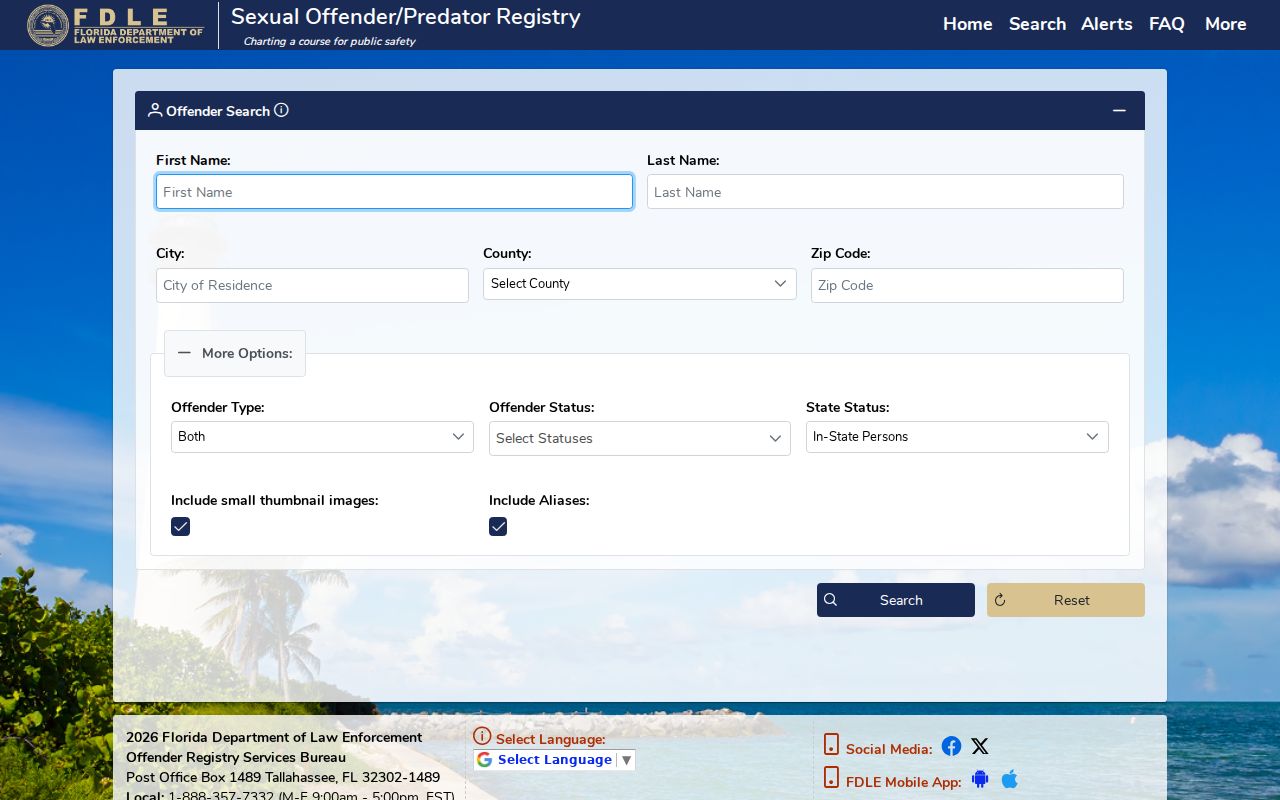
Use the registry only for its stated public-safety purpose. Never use a result as authority to confront, follow, or threaten anyone.
Tallahassee Neighbor Privacy Limits
Property rolls do not disclose every renter or household member. Utility, delivery, and DMV address data cannot be assumed public. Florida voter files withhold Social Security, driver-license and state-ID numbers, registration source, signatures from copying, preregistered minor data, and protected addresses. The Address Confidentiality Program uses a substitute address for qualifying relocated victims, while section 119.071 protects other eligible people and families.
A custodian may redact protected facts while releasing the rest of a record. Absence from a public block list therefore does not prove absence from Tallahassee. It may reflect an exemption, an unregistered adult, a renter not named in parcel data, a recent move, or the narrow purpose of the selected source.
When a public portal fails, make a narrow request under Florida Public Records Law. Send it to the office that created the record, identify the address or parcel, give a date range, name the fields sought, and say whether inspection is enough. A requester need not explain a personal purpose or cite Chapter 119. The custodian should separate exempt facts from the public remainder and identify the legal basis for a redaction. City records use the Treasurer-Clerk channel; parcel records go to the Property Appraiser, election data to Leon Elections, and court files to the Leon Clerk.
Lawful use. Tallahassee neighbor records support civic curiosity, reconnection, and personal safety. Florida law forbids stalking, harassment, threats, and intimidation.