
Finding Tallahassee Residents
Begin with what is known: a full name, a current street address, an old address, or an approximate year. The Leon County Property Appraiser links names and street locations to parcels. The Clerk's Official Records index then connects those parcels to deeds, mortgages, liens, and other recorded instruments. Florida voter information may confirm a registered residence, while a court party search can distinguish a person through case roles and dates. For an older Tallahassee household, printed city directories and census schedules are often more useful than a modern name search.
No official residents directory lists every person. A parcel record identifies the tax owner, not all occupants. A mailing address may differ from the property location. Voter files omit people who are not registered and suppress protected records. Court and business indexes show a legal connection, not a home address by themselves. Compare names, middle initials, dates, associates, parcel identifiers, and document references before deciding two entries concern the same person.
- Search the Leon County property roll by owner name or street address. Copy the parcel number, situs address, mailing address, and newest sales book and page.
- Check Florida voter information when the search concerns the voter and the required identity fields are known. Treat protected or missing entries as inconclusive.
- Use the Leon Clerk grantor and grantee index to inspect deeds and liens tied to the name or parcel trail.
- For past residents, compare State Library city directories with census, obituary, probate, and cemetery evidence.
- Send a narrow Chapter 119 request to the proper custodian when the record is public but no online index covers it.
Tallahassee Resident Record Keepers
Tallahassee is both Florida's capital and the Leon County seat, so municipal, county, and state custodians overlap within one city. The Clerk records land instruments and maintains trial-court files. The Property Appraiser supplies the owner-to-parcel bridge. The Supervisor of Elections handles county voter requests, while the Division of Elections provides the state self-lookup and extracts. City records go through the Treasurer-Clerk unless police, permit, or another specialized custodian holds the file. Address research across a whole road belongs in the Tallahassee street directory workflow.
Leon Elections Office
2990-1 Apalachee Parkway
Tallahassee, FL
850-606-8683
Tallahassee Property Roll Search
The Leon County Property Appraiser accepts either a name, a street address, or a parcel ID. Searching only the street name, with the suffix omitted, can browse parcels along a road. Results identify the parcel, tax owner, location address, property use, tax district, and acreage. A parcel detail can add the mailing address, legal summary, subdivision, sales book and page, and building facts. The situs address means the physical property location. It is distinct from the address where tax mail is sent.
| Field | How Tallahassee searchers use it |
|---|---|
| Owner name | Try surnames, entities, trusts, and name variants. |
| Street number and name | Use both for one parcel, or the street name alone for a road. |
| Unit and direction | Narrow condos and streets with directional forms. |
| Suffix | Optional; omit it when road, street, or avenue is uncertain. |
| Parcel ID | Open the known tax parcel directly. |
The Leon County property portal shown below is the strongest starting point for an address, but it does not prove who sleeps there. Homestead information and matching situs and mailing addresses can support an owner-occupancy inference. They still do not identify renters or every household member.
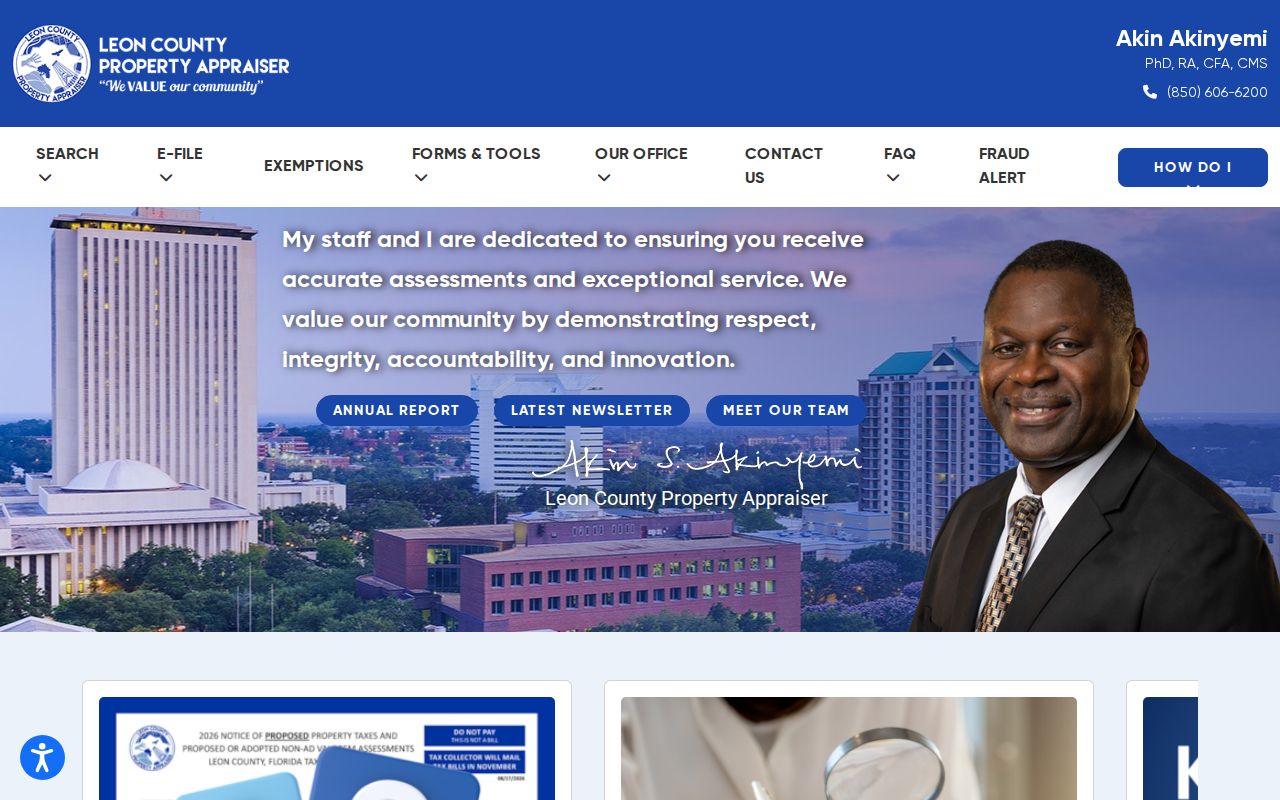
The search screen connects an owner or street to the parcel key needed for deeds, tax records, and GIS maps.
Tallahassee Deeds and Court Names
The Leon County Clerk maintains two separate trails. Official Records cover deeds, mortgages, liens, plats, judgments, and other recorded instruments. The books begin in 1826. Records and images from 1953 forward are online, while older material is available on microfilm. Search by grantor, the party giving an interest, or grantee, the party receiving it. Book and page references then connect the index result to the recorded image.
Court records use party roles instead of ownership roles. A matching name may be a plaintiff, defendant, petitioner, respondent, decedent, personal representative, or lawyer. Leon's public court landing page distinguishes open web access from secure document access, and some records remain confidential or sealed. Probate has a separate microfilm name index that begins with the first letter of the last name. A court match should be checked against middle names, dates, related parties, and the property trail.
Visit the Leon County Clerk records hub for the proper branch. The captured Clerk page below helps distinguish the office's court, official-record, marriage, foreclosure, and tax-deed channels.
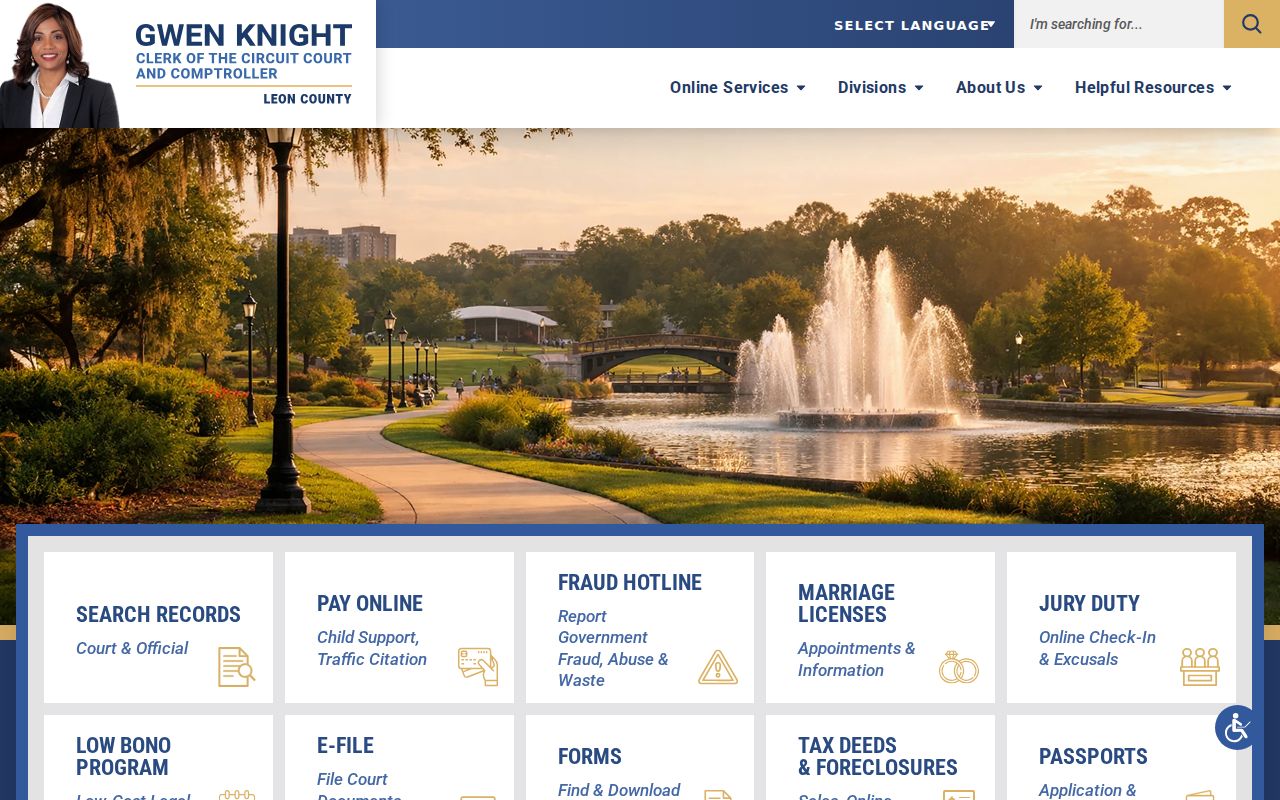
Choosing the right Clerk index prevents a deed search from being mistaken for a court party search.
Current Tallahassee Resident Rolls
A current Tallahassee residents directory must be assembled from official rolls with different scopes. Property files cover owners. Voter data cover registered voters, subject to protected-address and personal-data exclusions. Recorded instruments list parties to public filings. City staff pages identify public roles, and neighborhood association records describe civic groups rather than every household. None is a complete census.
| Source | Who It Lists | Keeper | Access |
|---|---|---|---|
| Property roll | Tax owners | Leon Property Appraiser | Free search and download |
| Voter records | Registered voters | Leon Elections and Florida DOS | Self-lookup or records request |
| Official Records | Parties to recorded instruments | Leon County Clerk | Free index; older microfilm |
| City staff directory | Public employees and roles | City of Tallahassee | Free department pages |
| Association database | Registered civic groups | City Neighborhood Services | Free public database |
Use the source that fits the question. An address calls for the parcel roll. A transfer calls for Official Records. A claimed professional role belongs in the state license portal, while a business relationship belongs in Sunbiz. When a single name must be confirmed across sources, follow the Tallahassee resident lookup method and keep each record's role distinct.
Florida Voter Record Limits
Florida's state voter lookup is designed for a person checking a specific registration. It requires first name, last name, birth date, and an acknowledgment. Leon's voter page may return registration information, polling place, sample ballot, election dates, and vote-by-mail status. It is not a block-browsing tool. Protected-address voters are directed to call the Supervisor of Elections instead.
Broader voter data are public under Florida law, but the public file is trimmed. Social Security numbers, driver-license or state-ID numbers, registration source, and data for preregistered minors are withheld. Signatures may be viewed but not copied. Address Confidentiality Program participants and people covered by statutory exemptions are suppressed. Voting history shows which elections involved participation, never the ballot choice.
Use records lawfully. Tallahassee resident rolls may support family, civic, and personal research. Never use an address or identity trail to stalk, threaten, impersonate, or harass anyone.
The Florida Chapter 119 index shown below is the starting point for general public-record law, but record-specific exemptions still control.
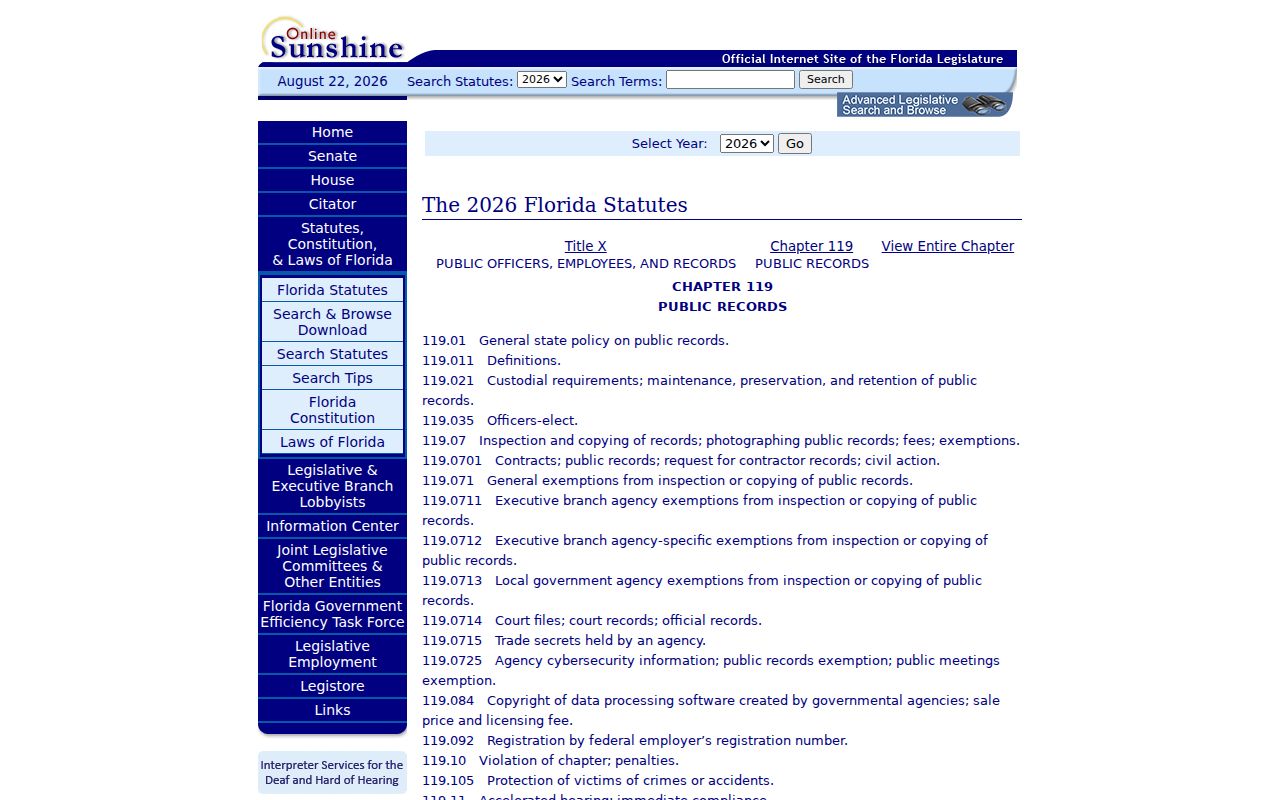
The statute index helps a requester identify the access rule and the exemption a custodian cites for any redaction.
Tallahassee Vital Record Boundaries
Vital records confirm an event, not a present address. The Florida Department of Health in Leon County can issue local birth and death certifications, while the Bureau of Vital Statistics handles Florida birth, death, marriage, and dissolution certifications. Marriage and dissolution records from June 6, 1927 forward use state certification and index routes; earlier marriage records come from the issuing clerk, and the actual divorce decree comes from the court.
Florida Statutes section 382.025 limits access. Birth records less than 125 years old are confidential unless an eligible requester applies. Death records without cause are generally available, but cause-of-death information remains restricted for 50 years to listed eligible people. The official application route may require proof of identity, eligibility, and the correct event details. These limits are why a missing online result is not proof that no record exists.
The Florida vital records hub pictured below separates certificates by event and directs applicants to the proper forms.
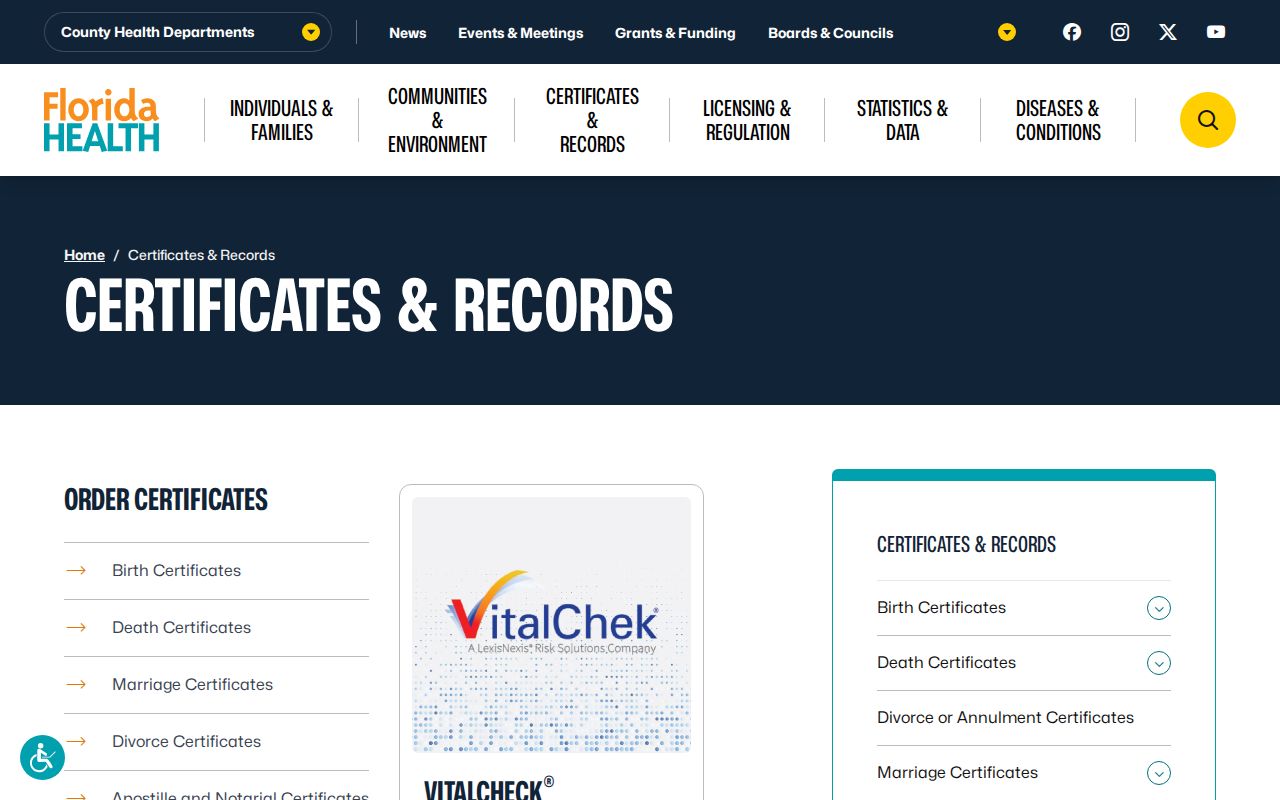
Use the event date and eligibility rules before ordering, and seek the underlying court file when a certification is not enough.
Tallahassee Chapter 119 Requests
Florida Constitution article I, section 24 and Chapter 119 support inspection and copying of nonexempt public records. A Tallahassee requester does not need to cite the law or state a purpose. A useful request names the record, custodian, date range, person, address or project, and preferred format. Asking to inspect before buying copies can control cost. An agency may charge the actual duplication cost and a reasonable special-service charge when extensive technology or staff work is needed.
The City Treasurer-Clerk accepts general city requests through its online portal or at City Hall, second floor, 300 S. Adams Street, Monday through Friday from 8 a.m. to 5 p.m. Police and crash files go to TPD Records, while permit files go to Growth Management. Email sent to Florida government can itself become a public record, so phone or written delivery is the alternative for a requester who does not want an email address exposed.
Open the City of Tallahassee records request page before sending a municipal request.
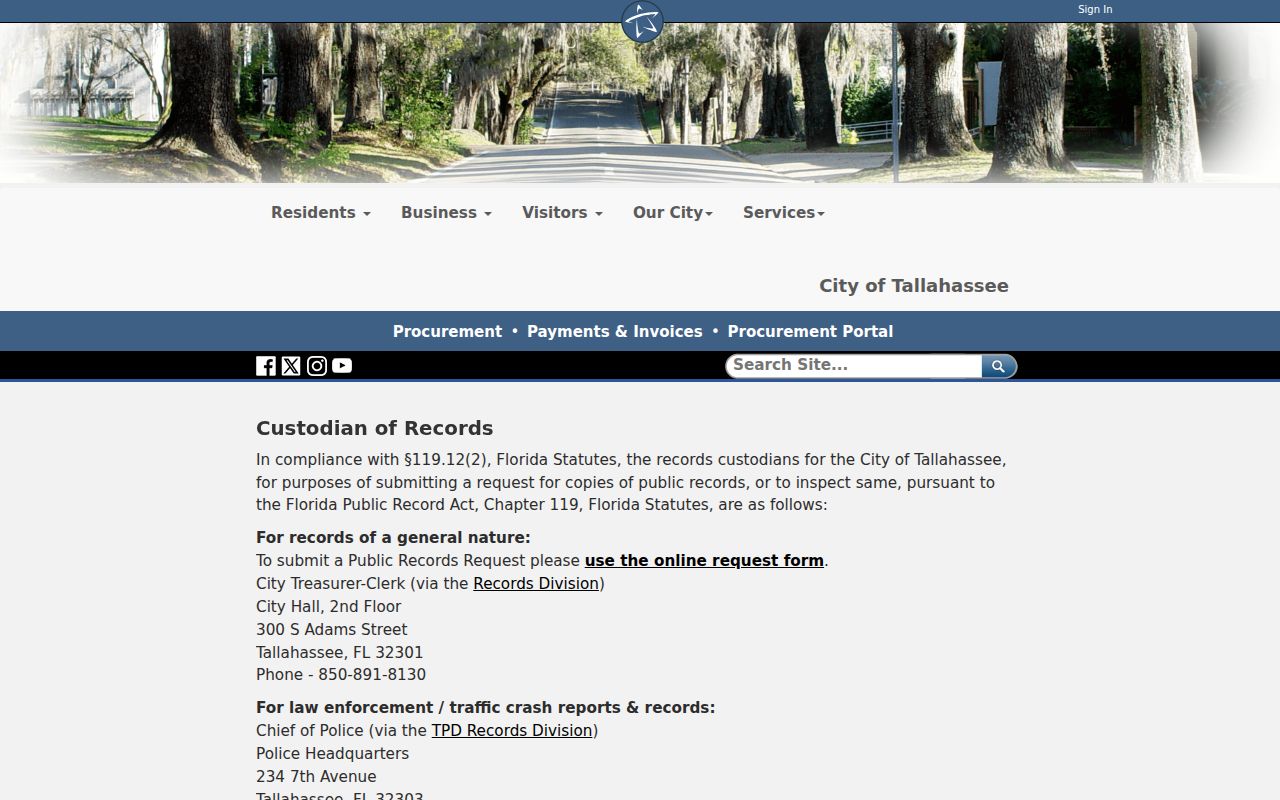
The city page routes requests by custodian, which reduces transfers and helps keep a narrow request moving.
Tallahassee Record Terms
A few labels recur across the Tallahassee residents directory. Knowing them prevents a search result from being read too broadly.
- Roll
- An official list made for one purpose, such as taxes or voter registration, not a list of every resident.
- Index
- A finding aid that points to a case, book, page, or image. It is not always the full record.
- Parcel
- A tax-mapped unit of land identified by a parcel number.
- Criss-cross directory
- A historical directory arranged by street address, useful for finding occupants when only a location is known.
Official sources show when and why a name entered a file. Commercial people-finder tools combine public and private data, may merge people with the same name, and often hide the age of a source. Use them only as unverified leads. A dated government index, followed by its underlying image or certified copy when needed, provides a clearer evidence trail.
Tallahassee Address Jurisdictions
A postal address that says Tallahassee does not necessarily sit inside the City of Tallahassee. Postal delivery, municipal limits, voting districts, utility service, permitting, and code enforcement use different boundaries. The joint Tallahassee-Leon County GIS was formed by the City, County, and Property Appraiser in 1990. Its land tools accept a tax ID or parcel address and expose city-limit, zoning, flood, school-zone, aerial, and permit-map layers.
Use GIS to choose the custodian, not to prove a legal boundary. A parcel outside the city may send permit or code questions to Leon County rather than City Growth Management. Maps are reference products, not surveys or legal descriptions. The parcel ID and recorded plat or deed provide the next step when the exact boundary matters.
Protected Tallahassee Resident Addresses
Florida's broad access policy sits beside many narrow exemptions. The Attorney General's Address Confidentiality Program for victims of domestic violence provides a substitute mailing address under sections 741.401 through 741.409. Section 119.071 and related laws also protect home information for specified professionals, victims, and family members. Property, voter, and agency systems may suppress a name or address that would otherwise appear.
Do not try to defeat a suppression by combining partial records. A blank field or unmatched entry may reflect lawful protection, a spelling problem, an outdated index, or simple absence from that roll. Ask the custodian about the record's public status, and accept the statutory basis for a redaction.
Historical Tallahassee Resident Directories
Tallahassee's old directories provide the household layer that deeds cannot. Verified Polk issues include 1927, 1930, 1936, and 1940, with other catalog years requiring confirmation. Entries may give a householder, spouse, occupation, business, and street address. Later reverse sections arrange names by address. Compare each volume with census schedules, newspapers, yearbooks, church material, probate, and cemetery records because directory publishers omitted some people and neighborhoods.
The State Library and Archives of Florida, LeRoy Collins Leon County Public Library, Florida Memory, FSU Heritage and University Archives, FAMU Special Collections, and the Meek-Eaton Black Archives form an unusually deep local network. The archive trail also reaches Tallahassee legal instruments from 1825, Leon deed series, estate files, maps, and government records. The full shelf-by-shelf method belongs in the Tallahassee city directory collection page.
Browse the State Library and Archives research resources before planning an archive visit.
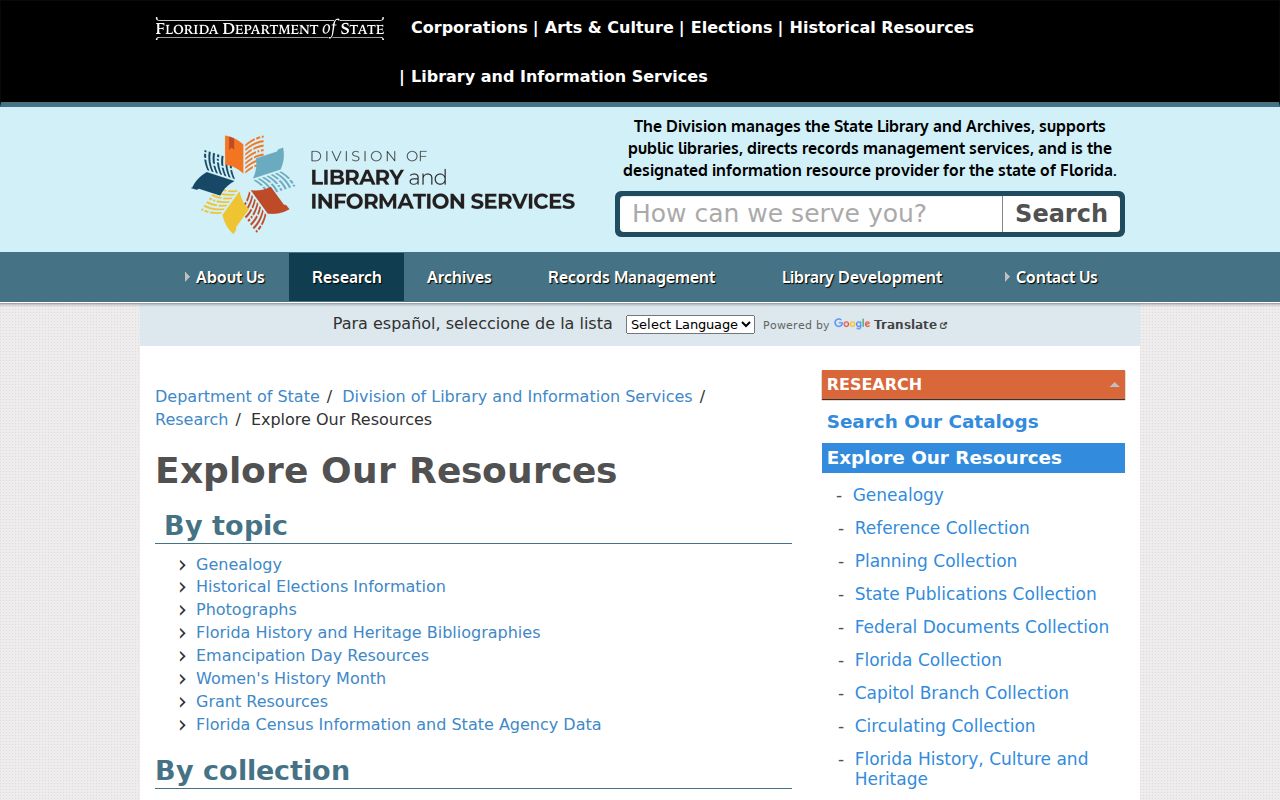
The state research hub brings catalog, reference, archive, and request channels together when a printed volume is not online.
Tallahassee Addresses in Context
Historical names need local context. Tallahassee directories reflect a capital city shaped by state government, Florida State University, Florida A&M University, and Black neighborhoods whose residents were not always represented evenly in commercial publications. Initials, maiden names, school ties, and agency roles can separate people who otherwise look alike. Local newspapers, yearbooks, church material, and university archives can fill a gap left by a sparse directory entry.
Address history can also document neighborhood change. A 1904 directory recorded five houses on Riley's Jefferson Street block in Smokey Hollow, all owned by Black men; a 1919 volume recorded six Black homeowners there. At 503 E. McDaniel Street in Lafayette Park, the 1930 reverse guide omitted the address, while the Wesson household appeared by 1936. These are specific snapshots, not complete resident rolls. They show why a researcher should compare more than one year and preserve the historical street form used by the source.